This production was staged in 2013 at Plymouth State. It was what I sometimes would call a “bookend” show. We produced our season primarily in two theatres in the Silver Center for the Arts: Hanaway Theatre, a large 660 seat proscenium, and what is now the Cheney Studio Theatre, a versatile thrust space with about 110 seats. The season would usually include a musical in each space and a straight play in each space – four shows total. In addition to that, we would usually slip in a small show at the beginning in September with a small cast and easy tech, and another at the end. These might happen in Smith Recital Hall (usually for music events) or in the Cheney Studio. By necessity, they had smaller technical demands than the other shows in the season, and smaller casts. Because they were placed at the ends, I called them “bookend shows.”
The Cheney Studio Theatre is an intimate space. Productions staged there put audience members within arms reach of the performers. Everything about the performance is affected by this. Acting requires subtlety bordering on cinematic methods. Costumes, stagecraft, scene paint, and lighting are served by attention to details that would be lost on the larger stage across the hall. Small choices are powerful.
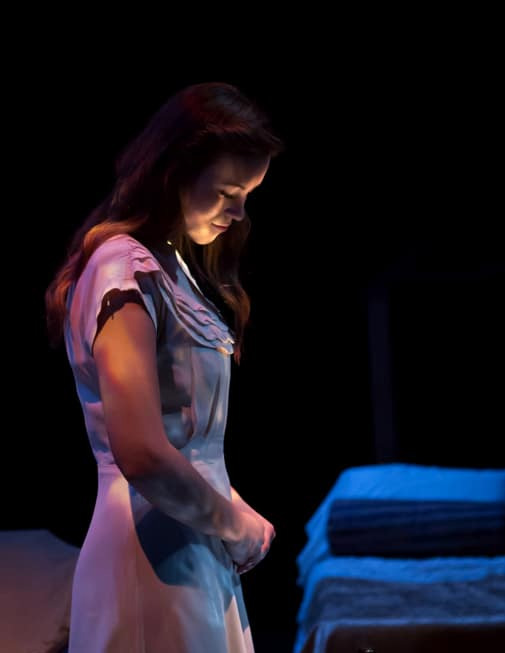
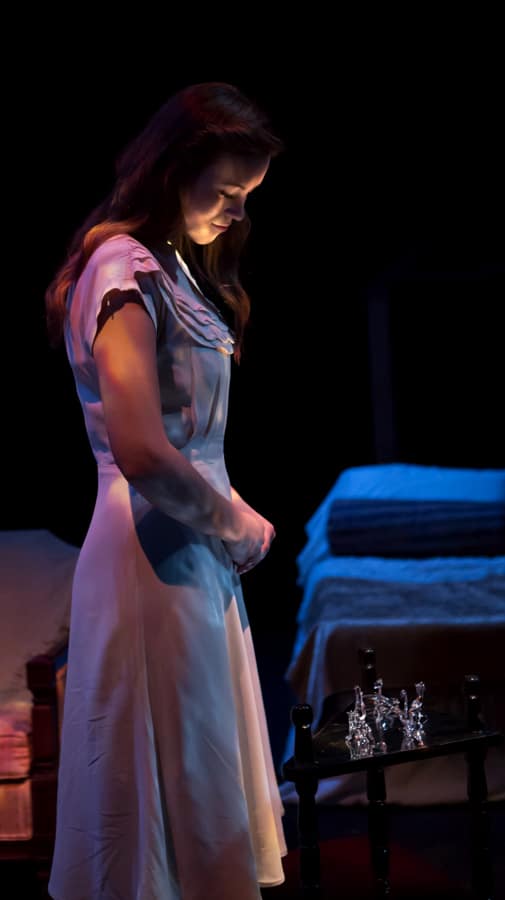
This is Meg Anchukaitis. She played the role of Laura Wingfield. Laura is fragile and reclusive. She walks with a limp. She avoids the world by listening to old records on a victrola and playing with her collection of glass animals – her glass menagerie.
Key dramatic moments happen with characters staring down at the menagerie. The power goes out late in the play because the electric bill has not been paid. The story continues with the menagerie reflecting and refracting candlelight. The story provides opportunities for extraordinary lighting. This is not the time for moving lights or fog, though. This is the time for finesse.
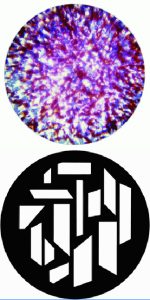
In these photos, you can see fractured light playing across Meg’s face. It is coming up from the menagerie. There are small, key choices that contributed to this scene. The first is the light source itself. It was two old Altman elliposidals lighting the area around the managerie. Each had a stippled glass gobo stacked with a steel textured gobo in it. I am pretty sure I saw these paired in an ad in a magazine around the year 2000 and I have used them together many times since.
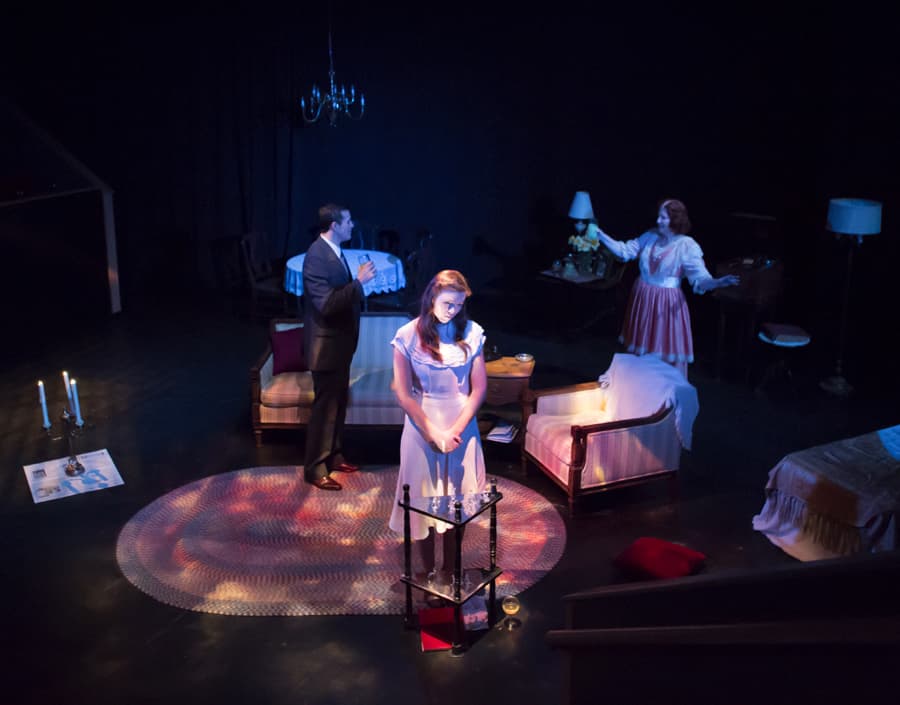
The power has gone out according to the play. The stage is lit by candlelight, deep blue fill-light, and stippled glass gobos.
The next key choice was the table on which the menagerie was set. The shelves were mirrors. They read like transparent glass, but most importantly, they reflected light upwards. The light hitting them was gobos, steep and coming from the front. The light reflected up onto anyone standing near the table, in sharp focus and at full brightness, just as if the light were shining up from the menagerie.
Next was the costume choice. Bianca Bird designed the costumes. She and director Paul Mroczka were happy to hear my suggestion that Laura’s dress be pale, with no pattern. It behaved like a little tiny cyclorama. There are both dramatic and practical critera that go into costume choices. In this moment, they all fell together.
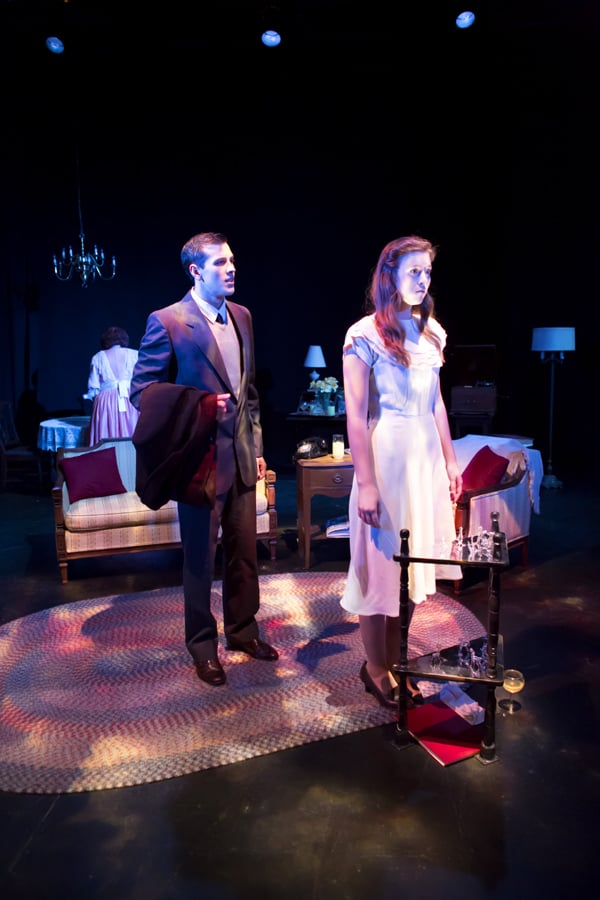
A final key choice was the tone and pace of the technical rehearsals.
I often work today using rigs with hundreds of fixtures, including color-changing LED units, movers, and full projection-mapped spaces. The challenge is time-management rather than control, which is different than forty years ago. We wrote fewer cues in my early career and we spent more time discussing them. For this scene, we spent time talking. I showed the director and the actors what the light can do. We explored how best to “find the light” when the the light is coming up off of the table from multiple directions. The area light itself was fractured and colorful. The entire sitting area was lit to resemble a kaleidoscope. When actors stepped near the menagerie, this effect doubled upward onto their torsos and faces.
Instead of writing many cues for lots of moments, we wrote one cue with lots of opportunities for the actors. We worked the scene and let them find out what the light could do. We made small adjustments to the entire look, rather than adding more cues. It was a very old-school way to work. For this production, it was exactly the right choice.
The portfolio listing for this show is here: https://scenicandlighting.com/portfolio_show/the-glass-menagerie-2/